thinkingML
Consulting Services
Strategic AI advisory for mission-critical execution

Most AI initiatives stall between pilot and production
Not from lack of capability, from lack of execution discipline
We bring twenty years of high-stakes engineering pedigree to modern AI challenges. We have built systems where failure has institutional consequences: trade surveillance, reinsurance systems, national AI architecture. We help organisations turn expensive experiments into defensible operational assets.
Method, not magic

Fractional CAIO
The Chief AI Officer role demands technical depth, regulatory literacy, and board-level accountability in equal measure. That combination is rare. For most organisations, the need arises at specific moments: governance design, regulatory scrutiny, critical vendor decisions, strategic inflection points.
You don't need a full-time CAIO. You need the right one, when it matters.
We provide Fractional Chief AI Officer engagements scoped precisely to your situation: board preparation, governance architecture, independent vendor oversight, and strategic continuity between engagements. Full commitment, defined scope, no permanent overhead.

Strategic Execution
Your pilots have proven the capability, but the path to value is blocked by siloed ownership and misaligned expectations. We solve the execution problem that sits between the Data Science team and the P&L.
We design target operating models that turn AI from a disconnected experiment into a core business function. We define clear ownership, map the value chain, and build the organisational bridge required to carry a model from the lab to the balance sheet.

Governance & Risk Control
Policy alone cannot control a probabilistic system. Your board asks, "Is this safe?" and paperwork is not a sufficient answer. We replace passive policies with active, verifiable controls.
We build governance that withstands scrutiny: audit trails, explainability pipelines, and automated bias detection. Governance isn't paperwork, it's the engineering discipline that makes AI defensible under regulatory examination and reputational pressure.

Production Engineering
A model in a notebook is a prototype. A model in production is critical infrastructure. The gap between the two is where most projects collapse under the weight of real-world data and operational constraints.
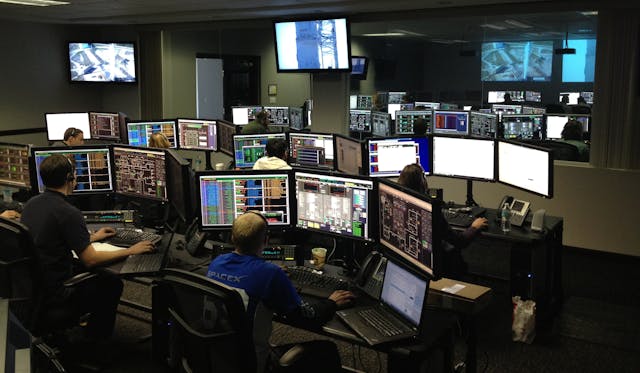
We bring industrial-grade discipline to AI infrastructure: observability by design, fallback logic for drift and degradation, and monitoring pipelines that detect decay before it impacts decisions. Production is not deployment, it's sustained, reliable operation.
Independent Assessment
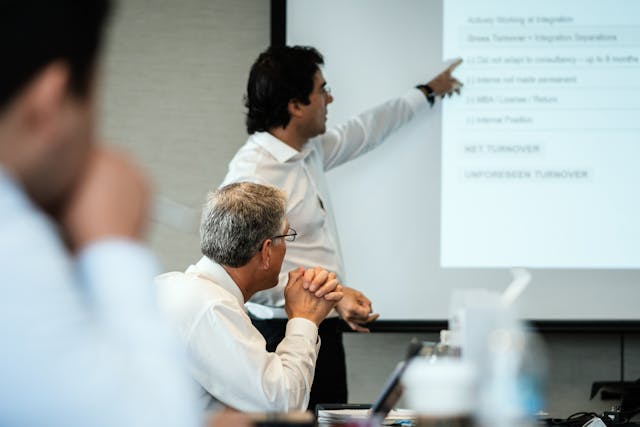
Vendors promise transformation; your team sees potential. But without independent technical vetting, you risk buying vapourware or inheriting technical debt that will take years to unwind.
We provide impartial, forensic evaluation of third-party tools and internal build-vs-buy decisions. We separate marketing claims from engineering reality, identify hidden risks and validate architectural fit before contracts are signed. Evidence over enthusiasm.
The Work Behind the Practice

AI Governance
When AI decisions affect customers, employees, and regulators, governance can't be
an IT afterthought. The common failure is governance arriving after
deployment, when accountability is already blurred and reputational
risk is already live.
This article defines governance as the engineering
blueprint: clear accountability, ethics, risk controls, data governance, and regulatory
posture that enable innovation with accountability.

Method Not Magic
When ML is treated as unknowable, organisations stop measuring properly and failures get blamed on AI behaviour instead of weak method. This article dismantles the black-box mythology and replaces it with engineering discipline.
AI Oversight
Board oversight fails quietly when directors use IT-era questions for systems that act
autonomously and accumulate risk invisibly. The gap isn't intent, it's inquiry that
doesn't map to AI-specific failure modes.
This framework provides the questions
and red flags that expose governance
lag across strategy, resilience, and capability, so oversight becomes strategic control rather
than compliance theatre.

Escaping Pilot Purgatory
Most organisations have 5+ successful AI pilots and zero production systems. The gap isn't
technical, it's organisational, operational, and cultural.
Pilots prove capability;
production demands maturity.
This analysis diagnoses why handover fails, where
governance fractures, and how to build the bridge from experiment to operational asset.

AI Agent Capability Maturity Model
You have pilots, demos, and enthusiasm, yet competitors translate similar starts
into operating capability while yours remain nearly ready.
The difference isn't tools: it's maturity across strategy, delivery,
operations, and governance. This model turns ambition into target levels, investment ranges,
timelines, and board accountability for the capability gap.